Document 3: A description of how Kōzuki Mitsuyoshi and Hori Hideyo quelled the Southern Pretenders.1
Home
上月満吉・堀秀世連署南方御退治条々
「庚正二年ゟ寛文
弐年迄凡弐百拾
七年也」
南方御退治条々
一 綸旨幷御内書等当方御頂戴之間
中村弾正忠貞友被仰付之処 於両宮
御退治事者既可弃一命上者争
不達御本意哉雖然至 神金玉
出現之儀者 罷入吉野山人数二度
不可帰路之条 神金玉出現之事
不申領掌奉返御内書等然其以後
三条殿御内石見太郎左衛門尉就惣別
申合彼御本所様江依巨細申古三福寺
相共被仰談重而被成下 御内書
御文言之事致忠節者冨樫次郎
成春跡加賀国半国河北石河両郡幷
備前国新田庄出雲国宇賀庄伊勢国
高宮保等為御恩賞可被下之由蒙仰
替之地候之間彼御判以下堀兵庫助依藤
弥三郎御使而入眼之後可給由申定
三福寺江預置申去康正二年丙子十二月
廿日為入吉野山大和国宇智郡迄罷向
人数着到次第不同
間嶋彦太郎 上月左近将監
中村弾正忠 堀兵庫助
丹生屋帯刀左衛門尉 浦上右京亮
小河兵庫助 石地兵庫助
河高治部丞 河勾五郎
小河七郎 村上源三郎
垂居次良右衛門尉 中村次郎
中村五郎 河高又三郎
木梨三郎 阿閇弥太郎
阿閇太良次郎 丹生屋四良左衛門尉
魚住彦四郎 魚住主計亮
石見四郎 中村新禅坊
鳥居千代松丸代 間島被官
上野小次郎 平瀬彦左衛門尉
小谷与次 中村弾正被官
為大和越知雑掌被遣 為京都雑掌残置事
小寺藤兵衛入道 依藤弥三郎
明石修理亮 如此処造意趣中村宗通
兵庫助依返忠一向不被入立之間暫経日数小谷
与次号忠阿弥以隠形之姿数个度御息所
就種々陳申 両宮御気色雖漸和尚以
大勢者御隔心之間残討手入山中畢
一 次年長禄元丁丑十二月二日夜子尅丹生屋帯刀左衛門尉
同四良左衛門尉於吉野奥北山両方 一宮奉討
同祗候人幷口三良左衛門尉致沙汰 御頸 幷
神金玉賜其則雖抽功伯母谷与申在所而
兄弟共仁討死仕条 神金玉被執返訖仍大功
之證拠暫不分明之處小寺藤兵衛入道廻不思
儀之了簡重而 神金玉奉取返巨細奥見之
一 同夜子尅於吉野山河野郷南方二宮奉討
同祗候人宇野大和守高野山智荘厳院弟子
定順同次良三郎名字不知此四人討捕訖大勢者
不被入子細見前
討手着到 次第不同
於南方赤松左馬助殿御子息号 二宮奉討御頸訖
間島彦太郎二宮引御衣 上月左近将監
中村弾正忠 二宮奉持御頸 中村次郎
於路次討死
鳥居千代松丸代 間島被官
上野小次郎 平瀬彦左衛門入道
平瀬小太郎 小谷与次
已上八人
為大和雑掌被遣訖 京都雑掌 京都雑掌
小寺藤兵衛入道 堀兵庫助 明石修理亮
播州三草山ニ出張
依藤弥三郎
前日以梶原清徳僧 俗名 中村弾正忠貞友依藤両人
五郎云 明石
自筆之書状在之 両宮御頸幷神金玉
同時雖奉取或被討或埋深雪適残者迷
山野故急度不及注進之拠小寺藤兵衛入道
大和越知申合調有様之註進小河中務少輔同前
一 為 神金玉出現之計略小寺藤兵衛入道性説和州
罷下小河中務少輔相共種々廻調略重而奉
執返 終次年長禄貳年八月卅日奉成
神金玉入洛畢然条々御忠節依無比類
如御約諾加賀国半国幷備前国新田荘
伊勢国高宮保等応御成敗云云
一 一宮者吉野奥北山御座
二宮者同河野郷此間隔大山雖有通路
七八里此山入之人数互申通如此達御本意者也
一 加賀国 数个度 幷備前国新田荘等合戦事
合戦事
面々重而可被注進申
右条々時宜有様大概如此然山入之人数
中于今相残上月左近将監存生仕為
末代之證拠山中公私存知前旁申
達記置之者也仍大概如件
「堀出雲守」
文明拾年八月日 秀世 (花押)
「上月左近将監」
満吉 (花押)
[Written on an attached gloss] From Kōshō 2 (1456) until Kanbun 2 (1662) equals about 217 years.
A description of how the Southern pretenders were quelled.
Concerning edicts (rinji)and communiques (gonaisho)
After we had received both imperial court edicts (rinji) and shogunal communiques (gonaisho), Nakamura Danjō no jō Sadatomo ordered us to chastise both Princes. We had already resolved to die for this cause. We then planned to enter the mountains of Yoshino to retrieve the Divine Jewel (shinkingyoku), never to return, in the end, this order was not given (ryōshō mōsazu), and all [shogunal] documents (gonaisho) [promising rewards] were rescinded. Later, we spoke with Iwami Tarō saemon no jō, a retainer of the [noble] Sanjō lord, and he conveyed our plans in detail [to his lord Sanekazu], who in turn communicated with the shogun [Ashikaga Yoshimasa], along with the now deceased Sanpukuji [monk], and they ensured that another [shogunal] edict be granted. That document states that if we performed service (chūsetsu), then the legacy of Togashi Jirō Shigeharu, half of Kaga province and both districts of Kawakita and Ishikawa, along with the Nii estate in Bizen province, Uga estate in Izumo province, and the public lands of Takamiya, in Ise, shall be granted as rewards [to Akamatsu Masanori] in exchange for [his former] lands [of Harima]. His edict and other documents were conveyed to Hori Hyōgo no suke, from the messenger, Itō (依藤) Yasaburō. After they had been viewed, the documents were stored in Sanpukuji. Then, on the 20th day of the 12th month of the past second year of Kōshō [1456], the following people set off and arrived in Ochi district, in Yamato province. They are as follows:
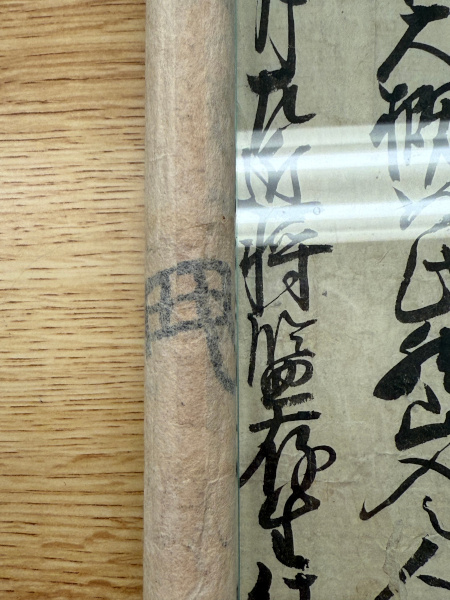
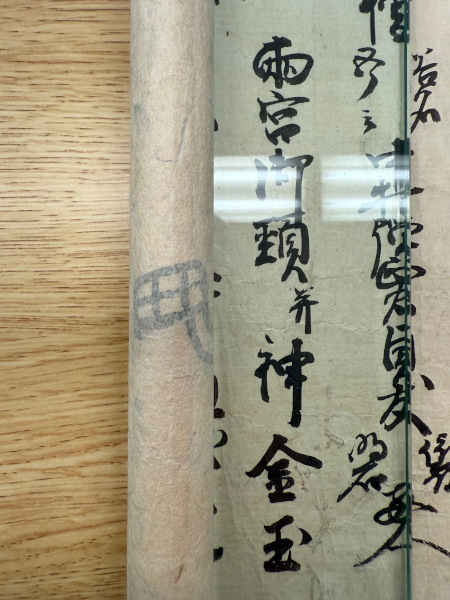
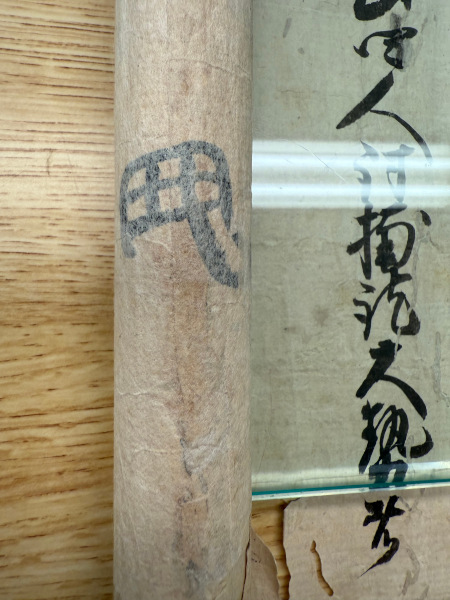
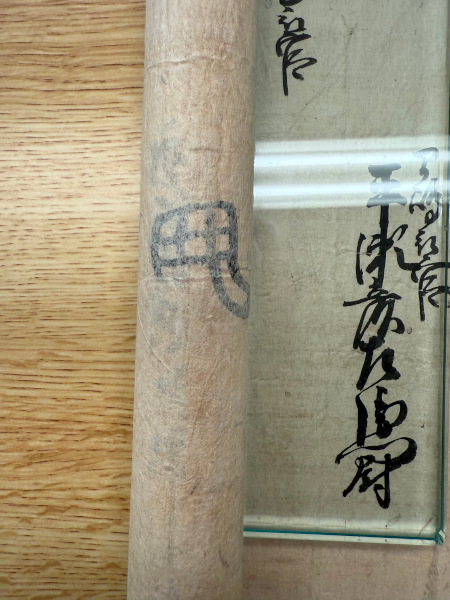
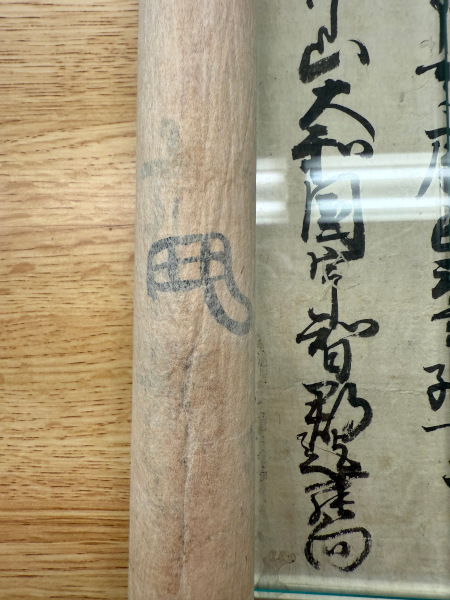
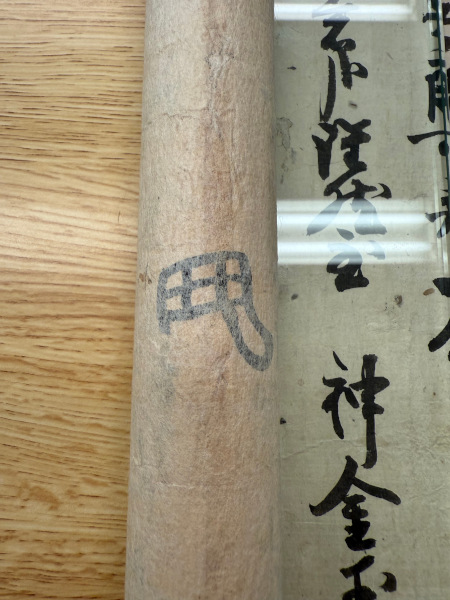
Majima Hikotarō Kōzuki Sakon shōgen[Mitsuyoshi] (monogram on reverse of document)
Nakamura Danjō no jō [Sadatomo] Hori Hyōgo no suke
Nyūnoya Obito saemon no jō Urakami Ukyō no suke
Ogawa Hyōgo no suke Ishiji Hyōgo no suke
Kawataka Jibu no jō Kawana (河匂) Gorō
Ogawa Shichirō Murakami Gensaburō
Taruii Jirō saemon no jō Nakamura Jirō
Nakamura Gorō Kawataka Matasaburō
Kinashi Saburō Ami Yatarō
Ami Tarōjirō Nyūnoya Shirō saemon no jō
Uozumi Hiroshirō Uozumi kazue no tsukasa (主計亮)
Iwami Shirō Nakamura Shinzenbō
Ueno Kojirō Hirase Hikosaemon no jō
a deputy of Torii Chiyomatsumaru a retainer (hikan) of Majima
Kotani Yoji a retainer of Nakamura Danjō
Dispatched to the Ochi in Yamato (zasshō) Those who remained in Kyōto (zasshō)
Kodera Tōbei nyūdō Itō Yasaburō
Akashi shūri no suke
Here, Nakamura Munemichi and Hyōgo no sukeclaimed that they had a grudge (ishu意趣)
[and wanted to join the Southern Court forces] but because of the [Akamatsu] betrayal [of 1441] (henchū ni yori), they were not at all allowed to ascend the mountains [of Yoshino]. Many days passed. Kodera Yoji adopted the name Chū-ami, and in disguise, met the two princes several times. After carefully explaining the situation, [the suspicions of] both princes were gradually put at ease. Now, he explained that we could not openly discuss this (onkakushin御隔心) with the vast majority [of Akamatsu] forces, and so leaving some guards (uchite) behind, we ascended the mountains.
Next, on the evening of the 2nd day of the 12th month of the first year of Chōroku [1457] ox fire hinotōshi(丑丁), at the hour of the rat (11pm-1 am), Nyūnoya Obito Saemon no jōand Shirō Saemon no jō , of the same family, ascended the northern mountains beyond Yoshino and killed the Southern First Prince and his follower, Iguchi Saburō saemon no jō. They took the First Prince’s head and the Divine Jewel, but at the place called Obatani, both brothers were killed, and the Divine Jewel was once again taken back. Thus, proof of this great exploit was lost for a while. After a while, the Novice (nyūdō) Kodera Tōbei, through marvelous planning, managed to recapture the Divine Jewel. The details are recorded next.
On the same night [that the Nyūnoya] were cut down, at the Kawano district in the Yoshino mountains, [Kodera] managed to kill the second imperial prince, and their followers, Uno Yamato no kami, Teijun from Mt. Kōya’s Chisōgonin (智荘厳院), and Jirō Saburō, surname unknown. Those four were killed. Most of the forces did not enter the area, but the particulars were seen (shisai kenzen子細見前).
The list of those attackers (in no particular order).
With the Southerners, he claimed to be the son of the Hon. Akamatsu samaosuk e
Majima Hikotarō Kōzuki Sakon shōgen
Took the clothes of the Second prince Mitsuyoshi. Took the head of the Second Prince
Nakamura Danjō no jō [Sadatomo] Nakamura Jirō
Carried the head of the Second prince. Killed on the roadside
The deputy of Torii Chiyomatsumaru A retainer of Majima
Ueno Kojirō Hirase Hikosaemon nyūdō
Hirase Kotarō Kotani Yoji
The above, eight men.
Dispatched as the Yamato representative The Kyoto representative The Kyoto representative
Kodera Tōbei nyūdō Hori Hyōgo no suke Akashi shūri no suke
Travelled to Mikusayama in Harima
Itō Yasaburō
The events of the previous day were recorded by the monk Kajiwara Seitoku, lay name Gorō. His record stated that handwritten letters (jihitsu no shojō) exist by both Nakamura Danjō no jō Sadatomo and Itō Akashi. According to them, the heads of both princes and the Divine Jewel were taken at the same time, but some [of the attackers] were killed, or were buried in the snow, while the survivors became lost in the mountains and could not adequately report what had happened. Kodera Tōbei nyūdō and the Ochi of Yamato inquired about the particulars, which they recorded. Ogawa naka no tsukasa shōyū did the same.
Item. In order to retrieve the Divine Jewel, Kodera Tōbei nyūdō Seisetsu traveled to Izumi province along with Ogawa naka no tsukasa shōyū, and after much planning, they were able to recover once again [the Divine Jewel]. Ultimately, on the thirtieth day of the eighth month in the following year of Chōroku 2 [1458], the Divine Jewel was returned to the capital. This great service (onchūsetsu) is without compare. In accordance with the agreement, half of Kaga province and Nii estate in Bizen, and the Takamiya lands of Ise province are to be administered [by Akamatsu Masanori].
Item. The first prince resided in the inner, northern mountains of Yoshino. The second prince resided in the Kawano district of the same area, which was separated by great mountains. Although only 7 or 8 leagues (li) distant by road, those who entered the mountains communicated with each other (otagai ni mōshitsūji). In this way, we were able to achieve our lord’s fervent desire (gohon’i tassuru mono nari).
Item. Concerning the battles of Kaga province—numerous encounters—and the battles at Bizen province’s Nii estate, each has been reported separately.
The above comments have been generally recorded, in an ad hoc manner. Nevertheless, of all those who entered the mountains, now only Kōzuki sakon shōgen survives. In order to leave this record for the later ages, I record here all that I remember of public and private affairs regarding [the campaign] the mountains. In general, thus.
The Tenth year of Bunmei (1478) Eighth month
(gloss) [Hori Izumo no kami] Hideyo (monogram)
(gloss) [Kōzuki sakon shōgen] Mitsuyoshi (monogram)
[Mitsuyoshi’s monogram appears on the back of this document, six times, where seven pages were attached].
Monogram written on the back
1. Hyōgo kenshi shiryōhen chūsei 9 kodai hoi, Kōzuki monjo doc. 46, 8. 1478 Kōzuki Mitsuyoshi Hori Hideyo rensho Minamikata ontaiji no jōjō, pp. 268-270. See also Mori Shigeaki, Yami no rekishi Gonanchō (Kadokawa sensho, 1997), pp. 210-219.